Skills
developed:
collaboration
About...
What is collaboration?
Collaboration is a process in which two or more individuals work together to achieve a common goal. In education, collaborative learning is an active methodology in which each student builds their own knowledge through interaction with their peers.
What is the difference between collaboration and cooperation?
Although some authors use these terms interchangeably, others point out differences. Collaboration involves shared authority and mutual responsibility, whereas cooperation can retain more traditional authority structures.
Principles of collaborative work
Positive interdependence.
One-to-one interactions.
Individual responsibility.
Development of social skills.
Group self-reflection.
Benefits
Improves academic performance.
Develops communication and socialisation skills.
Fosters personal growth and self-esteem.
Prepares students for the workplace.
Develops critical thinking and problem-solving skills.
What is truly crucial is how we implement these principles and benefits in the classroom; this is where the methodology proposed by J.S. Blasco Magraner and G. Bernabé Valero becomes especially relevant. This practical approach not only settles the theoretical discussion, but also offers a concrete framework for developing teamwork skills, whatever label we give it. Let us see how this proposal addresses the challenge of preparing students to work effectively with others.
Key elements of the programme
This structured approach enables teachers to assess collaborative competence objectively, regardless of the project's final outcome.
Observed benefits

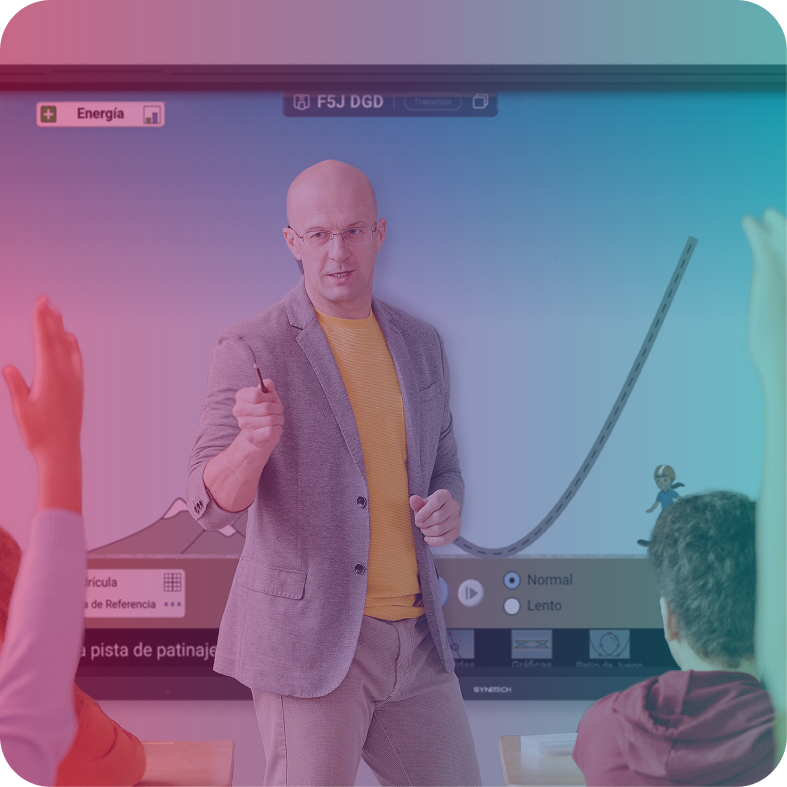
Today, as we become increasingly interconnected, the ability to collaborate effectively is as crucial as mastery of academic content. But in the digital age, how can we take this proposal one step further? Imagine enhancing every aspect of this approach with modern interactive technology. Interactive displays can not only transform how we implement this methodology, but also open up new possibilities for monitoring, assessment and active student participation. Keeping the essence of the original proposal, let us see how integrating our interactive displays can revolutionise the approach to collaborative learning.
Each of our interactive displays includes our EdSuite educational software, which provides support tools for students.
Role assignment: Thanks to the Synetech Airclass application, a space can be created on the interactive display to draw roles at random, providing a clear view of who is responsible for each task.
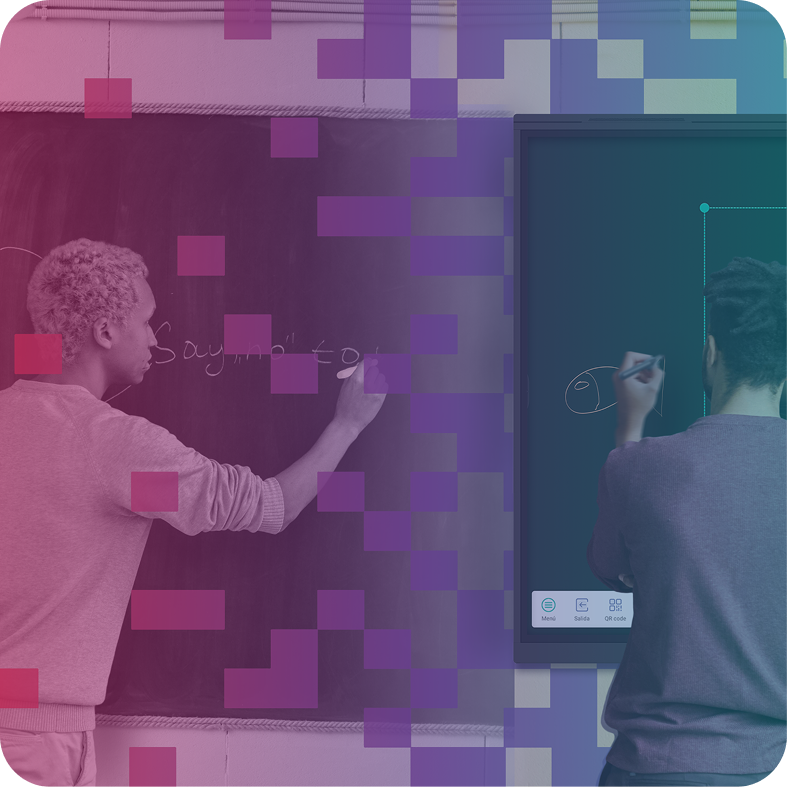
Digital brainstorming: During the initial phase of setting rules and discussing the advantages and disadvantages of group work, Synetech Note can be used on the interactive display for an interactive brainstorming session in which everyone can contribute simultaneously.
Interactive self-assessment: Thanks to the Synetech AirClass application, the interactive display can also be used at the end of the project for students to complete self-assessment and peer-assessment questionnaires interactively.
Collaborative data analysis: The interactive display can be used to show graphs and statistics about how collaboration has worked over time, based on the data collected during the process.
Group reflection sessions: Facilitate group reflection discussions using interactive tools on the interactive display, such as mind maps or cause-and-effect diagrams.
Collaborative resource library: Create a section on the interactive display where students can access resources on collaborative skills, conflict-resolution techniques and more.
This integration would make the process more attractive and accessible for students, while also providing teachers with powerful tools to monitor and assess the development of collaborative competences. The collaborative methodology proposed by Blasco Magraner and Bernabé Valero (2016), when integrated with interactive displays, creates a powerful synergy between innovative pedagogy and educational technology. This fusion strengthens the key elements of the original proposal and adds new dimensions of interactivity and active participation.
The challenge now is to adopt and adapt this methodology, combining the best of traditional pedagogy and technological innovation to create learning experiences that genuinely prepare students for the challenges of the future.
Explore EdTech for new generations
References
Blasco Magraner & Bernabé Valero. (2016).

Shall we talk?
Contact us for more information about SYNETECH's audiovisual solutions. Our professionals will contact you as soon as possible.