
How to integrate the
ICT, CT and PET?
About
Understanding ICT, TAC and TEP
Fundamentals of ICT in Education
They are the set of tools, resources and systems used to process, store and transmit information in digital format. They include devices such as computers, smartphones, tablets, as well as software, networks and the Internet. To make the most of these tools, it is essential to understand their foundations in the educational field.
Technological infrastructure
Internet connectivity is crucial for the effective integration of ICT in education. It is measured by three key aspects: the level of coverage of connected educational sites, the type of connection available and the teachers' perception of the operation of the service. The Organization of Ibero-American States (OEI) emphasizes that connectivity is not only about coverage, but also about its proper functioning. The OECD highlights the importance of an open, accessible and high-bandwidth Internet for educational innovation in the 21st century.
Digital resources
ICT resources cover a wide range of technological tools that facilitate the teaching and learning process. These include devices such as computers and tablets, educational software, mobile applications and online resources such as videos and interactive simulations. The integration of these resources allows the creation of dynamic and personalized learning environments, adapted to the needs and learning styles of students.
ICT teaching skills
To effectively use ICT in the classroom, teachers must develop specific competencies. This implies not only the technical management of the tools, but also the ability to design meaningful learning experiences that incorporate technology in a pedagogical way. Continuous training in the use of ICT is essential so that teachers can integrate these tools effectively into their educational practice and promote the development of digital skills in their students.
TAC: Transforming Learning
These technologies promote active learning methodologies, where students are protagonists of their own educational process.
Active methodologies with technology
TACs facilitate the implementation of more active methodologies based on the acquisition of digital skills. Tools such as virtual simulators, educational games, and project-based learning platforms allow you to apply theories and concepts in practical contexts. This not only improves understanding and retention of knowledge, but also stimulates critical thinking and problem solving.
Creation of digital content
The creation of digital content is essential in the integration of TAC. To develop effective content, you must follow these steps:
Identify the purpose and audience
Choose a topic and organize the content
Use various media (images, videos, graphics)
Select the right platform
Review and correct the content
Publish and distribute
Formative evaluation with CT
TACs offer new forms of integrated formative and summative assessment. Tools like interactive questionnaires and e-portfolios They provide immediate feedback, helping you identify areas of improvement and adjust learning strategies. Virtual forums, blogs and chats can also be used as evaluation instruments, promoting collective reflection and collaborative learning.
TEP: Empowerment and Participation
They are tools that encourage active participation and empowerment of students in the educational process. These technologies promote interaction and the creation of their own content, motivating education and fostering a critical and participatory spirit among students.
Learning networks
TEPs facilitate the creation of learning networks where students can collaborate on common projects, debate in discussion forums and contribute to collective wikis. These collaborative activities teach fundamental values such as respect for other people's opinions and the importance of teamwork. Tools such as video conferencing and chats facilitate interaction between students and teachers, promoting an inclusive and diverse learning environment.
Global collaborative projects
TEPs allow students to participate in collaborative projects on a global scale. Examples of this include creating classroom blogs, podcasts, or educational YouTube channels. These initiatives not only improve students' audiovisual skills, but also allow them to connect with other learners around the world, sharing knowledge and experiences.
Responsible digital citizenship
TEPs play a crucial role in the development of responsible, sustainable and inclusive digital citizenship. In Spain, the Government has developed the "Charter of Digital Rights" to protect the rights of citizens in the digital sphere. TEPs help students understand their rights and responsibilities in the digital environment, preparing them to be competent and ethical digital citizens.
| Technology | Main focus |
| TIC | Information access and management |
| TAC | Educational application of ICT |
| TEP | Student Participation and Empowerment |
Integration of ICT, CT and PET in Interactive Screens
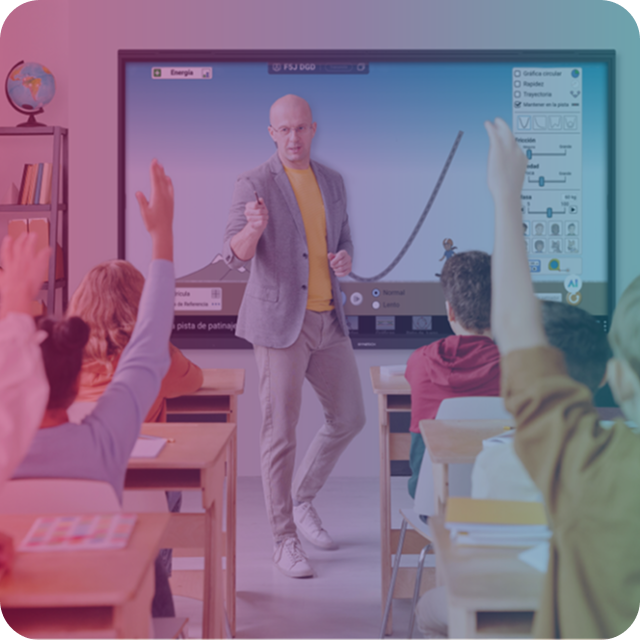
Interactive screens offer a range of possibilities to create more dynamic and participatory educational experiences. When incorporated into ICT, they become even more versatile tools that facilitate communication and access to information.
At the same time, the implementation of TAC allows these interactive screens to transform into dynamic learning platforms, promoting the acquisition and construction of knowledge in an interactive and collaborative way. Finally, the inclusion of TEPs enhances the active participation of users, empowering them to create content, share ideas and participate in decision-making processes.
This technological convergence in interactive displays not only enhances the educational and professional experience, but also promotes the development of essential digital skills.
Improved student engagement
Interactive displays allow you to customize and adjust lessons on the fly, adapting them to the changing needs of the class. This gives you the flexibility to explore new pedagogical approaches and teaching methods. By using interactive tools, your students can experiment and express their creativity in innovative ways, which can lead to greater enthusiasm for learning and increased motivation.
Personalization of learning
In today's complex educational landscape, the personalization of learning has become a primary objective. Interactive displays allow content to be adapted to meet the individual needs of each student, creating an inclusive learning environment. You can incorporate multimedia resources, such as videos, images, infographics, and animations, to illustrate complex concepts and capture students' attention.
Development of digital skills
Interactive displays are ideal for group activities, as students can work together on interactive projects and exercises. For example, they can use the interactive screen to solve mathematical problems collaboratively. Additionally, students can create presentations, videos and animations, developing communication and creativity skills. This not only enriches the educational experience, but also prepares them to face an increasingly technological and globalized world.
Conclusion
The integration of ICT, TAC and TEP in educational interactive screens is causing a revolution in the way of teaching and learning. These technologies have a significant influence on student engagement, personalization of learning, and the development of essential digital skills. By combining these tools, teachers can create more dynamic and engaging learning experiences, preparing students for an increasingly connected and technological world.
In summary, interactive screens equipped with ICT, TAC and TEP offer a range of possibilities to improve education. These technologies not only make access to information easier, but also promote collaboration, critical thinking and creativity. As we continue to explore their potential, it is crucial that teachers stay up to date with these innovations to make the most of them in the classroom.
Enter the world of EdTech to complement new technologies

Shall we talk?
Contact us for more information about SYNETECH's audiovisual solutions. Our professionals will contact you as soon as possible.